
Big Ideas,
Real Impact.
Driven by curiosity and built on purpose, this is where bold thinking meets thoughtful execution. Let’s create something meaningful together.
Is it time to call?
Most families reach out on an ordinary,
very hard Tuesday.
You don't need a crisis to call, and you don't need to have it figured out. If any of these sound like your week, a conversation with us costs nothing.
Our approach
The honest version of what ABA is here.
ABA has a real history, and parents are right to ask about it. Modern, assent-based practice looks nothing like the programs people read about from decades ago. Here is exactly what we do and what we refuse to do.
What our ABA is
- Child-led and assent-based. If your child says no — with words, with their body, by walking away — that's information, and we listen to it.
- Built on play. Skills are taught inside the things your child already loves, in natural moments, not at a desk with flashcards.
- Communication first. Every child gets a way to say no, stop, help, and more — speech, signs, pictures, or a device.
- Goals you chose. The treatment plan is written from what your family needs on a Tuesday morning, not from a standard template.
- Measured, so we can be wrong out loud. Data is reviewed continuously. If something isn't working in a few weeks, we change it.
What it is not
- Not compliance training. We are not teaching your child to obey adults or to sit still because it makes adults comfortable.
- Never punishment-based. No aversives. Ever. Not as a last resort, not with permission.
- Not about stopping stimming. Flapping, rocking, and scripting are regulation, not symptoms. We only address a behavior when it's unsafe or your child wants to change it.
- Not "as many hours as insurance allows." We recommend the hours your child actually needs, and we say so when that number is small.
- Not a closed door. You are welcome in every session. You will never be asked to wait in a lobby while we work on your child.
The program, start to finish
From your first phone call to your child's first win.
This is a real sequence, and each stage has to finish before the next one starts. Here is what happens, who does it, and roughly how long it takes.
-
1
Day one · 15 minutes
The first call
You tell us about your child in your own words. We tell you honestly whether ABA is what you need — and if it isn't, we'll say so and point you somewhere better. No sales pitch.
-
2
Week 1 · we do this part
Insurance verification & authorization
We run your benefits, tell you your exact expected cost before anything starts, and submit the prior authorization request to your plan. You don't sit on hold with your insurer — that's our job.
-
3
Weeks 2–4 · 2–3 visits
Assessment
Your BCBA meets your child at play, interviews you at length, and runs a skills assessment (VB-MAPP, ABLLS-R, or AFLS depending on your child) plus a functional behavior assessment if there's a safety concern. Bring your evaluation report and any IEP.
-
4
Week 4 · 60 minutes, together
The treatment plan meeting
We sit down and write goals together. You veto anything you don't want. You add anything we missed. Nothing is finalized until you've read it and signed it.
-
5
Ongoing
Sessions begin
Your child works with a consistent behavior technician who knows them, supervised by your BCBA. Same faces, same schedule — predictability is part of the treatment.
-
6
Every week
Parent & caregiver coaching
The most important hours are the ones we're not there for. You get regular coaching so the strategies work at home, at grandma's, and in the grocery store. Siblings and other caregivers are welcome.
-
7
Every 6 months
Progress review & re-authorization
We show you the actual graphs, retire goals that are met, and write the next set. This is also when we talk openly about reducing hours — the goal is always for your child to need us less.
Where sessions happen
Skills belong where life happens.
A skill your child only has in a therapy room isn't finished yet. We work in whichever settings your goals actually live in.
In your home
Mornings, mealtimes, bedtime, siblings, the actual doorway you actually struggle in.
At the clinic
Sensory-considered therapy rooms and a group space for practicing with peers.
School & community
Classroom support, IEP collaboration, and real practice at the store, the park, the masjid or church.
Telehealth coaching
Parent coaching sessions by video when getting everyone in the car is the hard part.
Your team
Who is actually in the room, and what those letters mean.
Nobody explains the acronyms, so here they are.
BCBA
Board Certified Behavior Analyst
Your child's clinician. Runs the assessment, writes the treatment plan, reads the data every week, and adjusts the program. Holds a master's degree, a national board certification, and a Michigan behavior analyst license.
RBT / BT
Registered Behavior Technician
The person your child sees most. Delivers the daily sessions, takes data, and builds the relationship. Completes 40 hours of training, a competency assessment, and a background check before working with any child — and is supervised throughout.
The wider team
SLP · OT · AAC specialist
If your child also receives speech, occupational therapy, or uses a communication device, those clinicians join the same case meetings so the goals reinforce each other instead of competing.
Supervision ratio
A BCBA reviews your child's program a minimum of 2 hours per 10 therapy hours.
Consistency
We assign a primary technician and protect that pairing. Changes are explained to you in advance.
Languages
Sessions and parent coaching are available in English and Arabic
Hours & intensity
"How many hours a week?" is the wrong first question.
The right one is: which skills, and how much practice do they need? Two very different programs come out of that answer, and your assessment decides which one your child gets.
Focused program
A short list of specific goals
For children who need targeted work — safety, communication, toileting, sleep, feeding, a specific behavior that's blocking daily life. Often the right choice for older children and for kids already doing well in school.
Comprehensive program
Broad development across many areas
For young children with significant delays across communication, play, self-care, and social skills at once. The evidence for early intensive intervention is strongest in the preschool years — which is why waiting is the one thing we'll push back on.
A promise about hours. Recommended hours come from your child's assessment, never from what your plan will authorize. If your child needs 12 hours, we will write 12 — even when 30 is approved.
See it for yourself
Meet the person who would work with your child.
The fastest way to stop worrying about what ABA looks like is to stand in the room where it happens. Come walk the space, ask a behavior analyst the questions that have been keeping you up, and leave without signing anything.
Visits run weekday afternoons and take about 30 minutes. Bring your child — we'd rather they meet the space with you standing right there.
Book a visitWhat a visit includes
- The rooms your child would actually use Therapy spaces, the group room, and the waiting area where siblings sit.
- Time with a behavior analyst Not a salesperson. The clinician who would write your child's plan, answering whatever you want to ask.
- A straight answer on cost and timing What your plan is likely to cover, and how long the wait to assessment really is.
The space & the people
Come see the rooms before you commit to anything.
Tours run on weekday afternoons — and bring your child, we'd rather they meet the space with you standing right there.
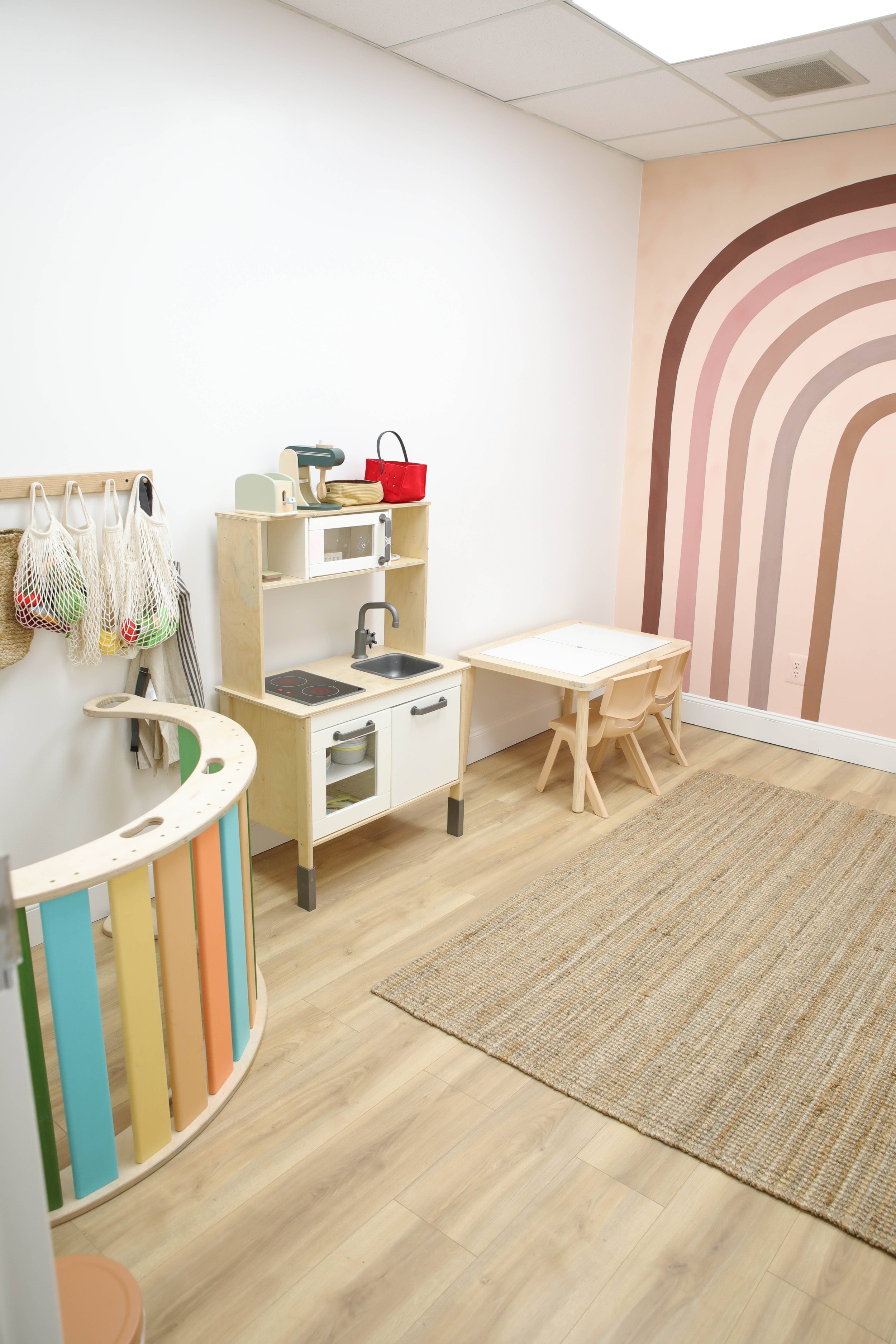

Every photo needs a signed HIPAA photo-release from the family before it goes on a public page — a treatment consent form does not cover it.
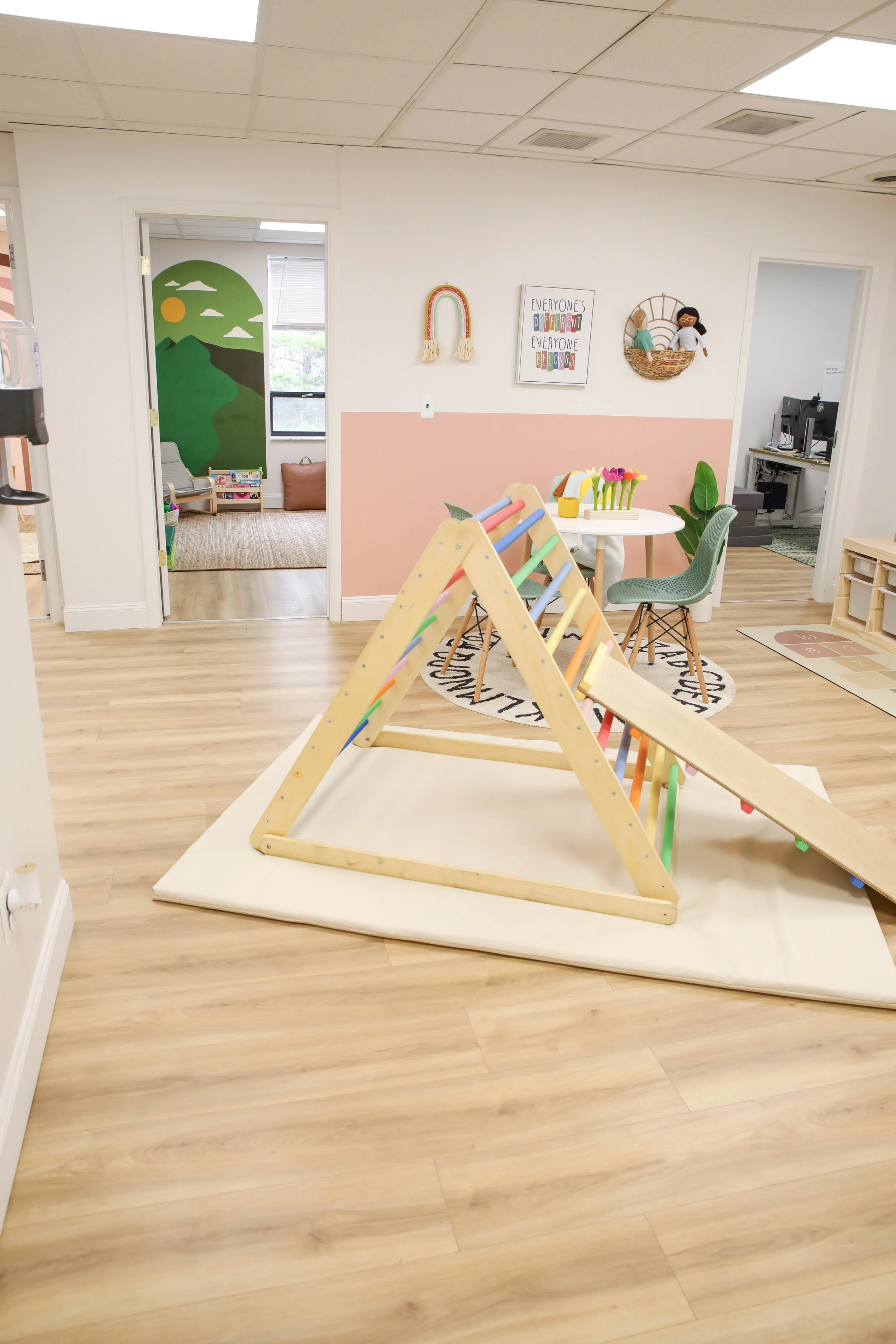
Insurance & cost
Michigan law requires most plans to cover this.
Autism benefits are mandated on most Michigan plans, and Medicaid covers ABA for children with an autism diagnosis. What varies is your deductible, your copay, and how many hours your plan will authorize at a time — so we check all three before you owe anything.
Plans we work with
Don't see your plan? Call anyway — out-of-network and single-case agreements are often possible, and self-pay rates are available on request.
What your plan will need
- A written autism spectrum disorder diagnosis from a qualified evaluator
- A physician referral or prescription for ABA services
- Prior authorization — first for the assessment, then for treatment hours
- Re-authorization roughly every six months with a progress report
No diagnosis yet? Anwar House also provides autism evaluations — ask about it on your first call.
What you'll pay
Before your child's first session, we give you a written estimate showing your deductible status, your per-session copay or coinsurance, and your out-of-pocket maximum.
If cost is the reason you're hesitating, tell us. Payment plans and sliding-scale options exist and we'd rather talk about it than lose you.
Questions parents actually ask
Ask us the uncomfortable ones too.
I've read that ABA is harmful. Why should I trust you?
Because that criticism is largely fair, and it's aimed at practices we don't use. Autistic adults who were harmed by ABA describe programs built on compliance, forced eye contact, suppressing stimming, and punishment. Those were real, and in some places they still are.
What we ask is that you hold us to it. Watch sessions. Ask why any goal is on the plan. If a goal exists to make your child more convenient for adults rather than more capable in their own life, tell us to remove it — and we will.
Will you try to make my child seem "less autistic"?
No. Being autistic isn't the problem we're solving. We work on things that expand your child's life: telling you what hurts, staying safe near roads, eating enough foods to stay healthy, joining a game they want to be in.
Masking is not a goal. Stimming is not a target. Your child's personality is not on the treatment plan.
My child is nonspeaking. Is ABA still appropriate?
Yes, and this is where having AAC and speech in the same building matters most. Communication is the first goal for every nonspeaking child we see — through a speech-generating device, picture exchange, signs, or whatever gives them the fastest route to being understood.
A child who can request, refuse, and protest has far less reason to escalate. Most of what looks like a "behavior problem" is a communication problem wearing a costume.
Can I stay and watch the sessions?
Always, and we hope you do. There is no session your child has that you can't be in. For some children we'll suggest starting a few feet back so they engage with the technician, but that's a suggestion, never a rule.
How long is the waitlist?
Currently about 2–4 weeks to assessment for most families, and it varies by location, hours requested, and insurance. We'll tell you the real number on your first call, not an optimistic one.
If we can't serve you soon enough, we'll say so and help you find someone who can.
What if my child cries or refuses during a session?
Then we stop and change what we're doing. Distress means the demand was too high, the moment was wrong, or the reinforcement wasn't meaningful — all of which are our error, not your child's.
We track assent withdrawal as data, the same way we track skills. A program that consistently makes a child unhappy is a failing program regardless of what the skill graphs say.
Do you work with our school and IEP team?
Yes, with your written permission. Your BCBA can attend IEP meetings, share data with the school team, and align goals so your child isn't asked to do things one way at school and another way in therapy.
How will I know it's actually working?
You'll see graphs, but that's the smaller half. The real measure is whether your Tuesday got easier — whether the haircut happened, whether they asked instead of screamed, whether you got through dinner.
At every progress review we ask you that question directly, and if the honest answer is no, we change the plan.
What if we want to stop?
You can end services at any time, for any reason, without explaining yourself. We'll offer a discharge summary and a warm handoff to whoever you're going to next. Nobody will pressure you to stay.
Getting started
Contact us
Call us, text us, email us, or have your pediatrician fax the referral straight over. Whichever is easiest today — we'll take it from there. One call, about fifteen minutes, no commitment.
Reach the intake team
Have these handy —
but don't wait for them
- Your insurance card, front and back
- The autism evaluation report, if you have it
- Your child's current IEP or IFSP
- Names of any other therapists your child sees
- The two or three things you most want to change
Missing something? Call anyway. Chasing paperwork is what our intake team is for.